Chandan Posted January 3, 2013 Posted January 3, 2013 LINK January 3, 2013 Tendulkar: I hate him like I love him Sachin Tendulkar's fans span generations: how can a man redefine longevity like that? By Suman Kumar, India "Yaaru pethha puallayo? Punyam panna vairu (Which fortunate mother gave birth to this boy? Her womb must be blessed), my late granny remarked upon hearing about Tendulkar's debut and subsequent exploits. She looked at her sons (my uncles) and said: "Yenakkum vandhu porandhudhu paaru! (And look at the one I landed up giving birth to) She was paying a glowing tribute to Sachin Tendulkar's mother and lamenting over her sons and their inability to get a job in the 'Gulf'. For a generation that believed success in life was directly linked to an engineering-college berth (or a medical-school berth), Tendulkar was an antithesis. And by following his exploits, a generation of us continued to live our dreams by proxy. I hated Tendulkar for it. One foggy February morning in 1992, in Chittoor (a small South Indian city), my friend Arun came running to my house and threw the Hindu newspaper at me. "Read the sports page, he said. The headline, if my memory serves me right, read "Tendulkar's Brilliance Illuminates Perth" India lost that match by a massive margin of 300 runs. But that innings, one of the greatest that I have ever seen, was some sort of a magical preamble. In 1998, when he destroyed Australia in Sharjah, singlehandedly, we realised that he was not just a great batsman. We had had quite a few of them by then, including Sunil Gavaskar. But until then I had never seen an Indian batsman treat the Australians the way Australians treated everyone else. It was almost like Tendulkar was telling them: 'those days are over'. However, it is not his achievements and successes that I want to stress upon. It is how he was reborn after each one of his failures. In Sydney, 2004, he didn't drive on the offside. How can a man be so maniacally focused? I hated him for that. I could never achieve 2% of that focus. Every time I became lazy, tempted to choose an easy way out, or just plain give up, it is people like Tendulkar that scream at you from those special corners in your head, through memories etched for life to not give up. I hated Tendulkar for that; for making me work harder that I wanted to. A few afternoons ago, my three-year-old little girl paused while pedalling her tricycle, glanced at the TV and said: "Sachin! I was shocked. I probably had mentioned him when I was pleading with her to switch to cricket from the cartoon show Chhota Bheem. From my granny to my daughter, four generations love him. How can a man redefine longevity like that? I hate him for that! I'd watched him in the recent past. I'd suffered as he failed with the bat. 'Maybe he should go now, I screamed. "Why can't he see? He is diluting his own greatness by suffering this! I wept. I knew I could be wrong. I was being emotional and stupid. And then, he quit ODIs. The format that he made his very own. How could he? It will be, forever, poorer without him. I hate him for that. .
Chandan Posted January 4, 2013 Posted January 4, 2013 LINK One made for one-day For sheer innovative and combative abilities, Sachin Tendulkar was an impeccable one-day cricketer and a captain's delight in any situation, writes Vijay Lokapally. N. SRIDHARAN Sachin Tendulkar gives Shane Warne the treatment on way to his maiden hundred in one-dayers, in the Singer World Series in Colombo in September, 1994. It was optional training. Most of the players had decided to stay indoors. But how could you shackle Sachin Tendulkar? He saw the opportunity to enjoy an extended stint, though the opponent two days later was only Kenya, a fledgling international team. Even for this 50-over contest, Sachin was unwilling to allow complacency impact his preparation. It was this unflinching devotion that made him the cricketer he was. There was a method to his cricket. He would not want to miss any of the action. He loved it. To bat and bowl and also contribute with his fielding made Sachin the ideal player to have. Captains drew strength from his presence. It took him nine innings to score his first half century in one-day internationals after beginning his career with zeroes against Pakistan and New Zealand. He grew as a worthy member of the one-day team with support from Ajit Wadekar, who influenced his approach in the shorter form of the game. "He had the quality to fight and this is what you need most in one-day cricket. There is not much time to analyse and implement. Decisions have to be taken in a flash and you have to have the energy and potential to do that. Sachin had it. I noticed early his desire to be in the thick of action and it suited the team, remembered Wadekar. There were many instances when Sachin took the cue and responsibility. He grabbed the chance to open the innings in Auckland in 1994 when Navjot Singh Sidhu pulled out due to a stiff neck. When offered the job, Sachin accepted it, but also insisted that it should not be a one-match arrangement. Wadekar and skipper Mohammad Azharuddin assured him a long run and he justified the promotion with a sterling 82 off 49 balls with 15 fours and two sixes. Was Sachin a complete one-day cricketer? He was one, without doubt. "I have not seen a player with such a fierce involvement. You just can't keep him away from the action, Kapil Dev had remarked. He should know, having experienced it first hand in 1993 during the Hero Cup. It was a delicate situation with South Africa needing only six runs off the final over. Even as Kapil prepared himself to bowl, skipper Azharuddin accepted wicketkeeper Vijay Yadav's suggestion that a slow bowler could be used. Sachin became the obvious choice. With his competitive streak at its peak, Sachin swung the match India's way. It made a huge impact on his career and of course established his credentials as a player who could handle any pressure with consummate ease. Sachin has often reflected on that wonderful night at the Eden Gardens and confessed it gave him the confidence to look at his cricket with a different perspective. For Sachin, the transition from an accumulator in Tests to a plunderer in ODIs was smooth. His excellent reading of the game allowed him the freedom and space to plan his assault. The wide range of shots at his command meant he could take chances and get away with minimum risk. He gave a new dimension to batting in one-day cricket with match-winning and game-changing contributions. V.V. KRISHNAN When Tendulkar, the bowler, won the match for India, the Hero Cup semi-final against South Africa in Kolkata on November 24, 1993. It was never going to be easy for Sachin to have his way. But he mostly dictated terms. He could beat a packed field and a concentrated attack by adeptly placing his shots for maximum returns. He could pace his innings well, mark his areas of strength and the bowlers to attack and set up victories at home and distant lands. It was never going to be easy because Sachin was the marked man. Yet, the consistency with which he delivered made him a special member of the team. There were, however, two instances of Sachin not being able to lift the fortunes of the team. On both the occasions the bowler happened to be Glenn McGrath and both the occasions came in a World Cup contest. Sachin could not conquer McGrath at the Oval in 1999 and in Johannesburg in 2003. These failures surely rankled in an otherwise illustrious career. From his formative years, Sachin fancied himself as an all-rounder. Ready to bowl, ready to bat at any position and ever-willing to field in any position! "His enthusiasm was infectious really, was how Sidhu described Sachin's involvement. Apart from his legendary batting exploits, Sachin also took his bowling seriously. "As good as any in the business, Wasim Akram had once commented on Sachin's bowling abilities. He could bowl seam and spin; he could bowl off-spin and also slip in a leg-spinner. His versatility and keenness to experiment made him the most innovative one-day player of his time. And Sachin knew it too. There were times when Sachin would need to be dragged out of the nets as he was also obsessed with bowling there. He would finish his batting and pick up the ball to try and hone his skills. It was a sight to watch him make ferocious claims in the nets. He was an ultra-competitive cricketer and never compromised his role. By opening, Sachin attempted to give the innings a direction. The straight drive would indicate his form and he was at his best when challenged. He believed in setting benchmarks and the team always looked up to him in times of distress. For someone who took 79 matches to make his first ODI century, it was remarkable that he had scores of 175 (against Australia) and 200 not out (against South Arica) within the span of eight matches at 36 years of age. Thirty-three of his 49 centuries came in a winning cause. For sheer innovative and combative abilities, Sachin was an impeccable one-day cricketer. A captain's delight in any situation.
Chandan Posted January 5, 2013 Posted January 5, 2013 Man of records With over 18,000 runs in one-day cricket, Sachin Tendulkar stands head and shoulders over the rest in the elite 10,000-plus runs club. By G. Viswanath. V.V. KRISHNAN In full flow Sachin Tendulkar lofts Chris Pringle of New Zealand to the boundary. Opening for the first time in ODIs, Sachin Tendulkar blasted 82 off 49 balls in the match at Eden Park, Auckland, on March 27, 1994. Sachin Tendulkar occupies the exalted position in the 10,000-plus runs club in one-day internationals. He made his debut against Pakistan at the Jinnah Stadium, Gujranwala, in December 1989 and went on to play in 463 ODIs in 23 years. Tendulkar, who amassed 18426 runs against 15 countries, is 4722 runs ahead of Ricky Ponting, who announced his retirement in December last year. Illustrious names such as Sanath Jayasuriya, Inzamam-ul-Haq, Jacques Kallis, Sourav Ganguly, Kumar Sangakkara, Rahul Dravid, Mahela Jayawardene and Brian Lara too feature in this elite club of batsmen, who have scored over 10,000 runs in ODIs. This goes to prove that their rich performances have truly embellished the one-day format of the game that was introduced to the cricketing world in 1971 as Australia took on England at the Melbourne Cricket Ground. Along with Tendulkar, the other two Indians in the club, Ganguly, who doubled up as a utility seamer, and Dravid, who also proved to be an efficient wicketkeeper, formed a formidable threesome. They were chiefly responsible for making India a major force in limited-overs cricket and taking the nation to the final of the 2003 ICC World Cup in South Africa. Virender Sehwag (8238) and Yuvraj Singh (8051) have a realistic chance of expanding the Indian presence in the 10-member club, but it will take at least three years for them to reach that unique landmark. Among players of other countries, Chris Gayle of West Indies and Michael Clarke of Australia should make the most of the opportunities, but with players making clear choices between the three formats, what is almost certain is that this club will remain small. Barring Mahela Jayawardene of Sri Lanka, who achieved the feat in November 2012, the others have played over one-and-a-half decades of one-day internationals. The format of the game (the first three editions of the World Cup were 60 overs a side) is such that it gives ample freedom to gifted openers and middle-order batsmen to demonstrate a variety of strokes. It also gives them the opportunity to score at a good speed in order to make their team's position strong. Dravid scored heavily in the middle-order (playing at Nos. 3, 4 and 5) and provided his team stability. Sangakkara too played a similar role, but he has scored a high percentage of his runs at No. 3. Someone like the Australian left-hander, Michael Bevan, regarded as a one-day specialist, made 6912 runs in a little over 10 years with six centuries, but he was a fine finisher and was seen more in cameo roles scoring quick runs. India's fortunes in one-day cricket swung like a pendulum and they hinged on the form of Tendulkar, Ganguly and Dravid. Tendulkar figured in 234 matches that India won, scoring 11157 runs at 56.63. Dravid featured in 160 matches that India won, scoring 5729 runs at 50.70, while Ganguly played in 149 games that his team won, making 6938 runs at 55.06. Tendulkar is also the common factor in many of India's first wicket and second wicket century partnerships with Ganguly and Dravid. The three were the mainstay of India in the World Cup played in England (1999), South Africa (2003) and the West Indies (2007). However, Tendulkar has played in a record six, starting with the Benson & Hedges World Cup in Australia and New Zealand and finishing with the 2011 edition that India won by defeating Sri Lanka in the final. In the World Cup honours list, Tendulkar comes second best to Ponting. Although the Indian enjoys a better run-aggregate at 2278 in 45 matches with six centuries and 15 half-centuries at a high average of 56.95, he has only one big prize under his belt. Ponting has three: he was a member of the Australian side led by Steve Waugh that won the 1999 World Cup in England before leading the Aussies to victory in the 2003 and 2007 editions. In fact, it was Ponting's match-winning 140 in the final at the Wanderers (Johannesburg) that thwarted India's bid to win the World Cup the second time in 2003. Tendulkar, who scored 673 runs in that edition, was declared the Player of the Tournament and received the trophy from Sir Garfield Sobers, but this was only a consolation. Sri Lanka has three players in the 10,000-plus runs club Jayasuriya, Sangakkara and Jayawardene. Initially, players such as Arjuna Ranatunga, Aravinda de Silva, Jayasuriya, Chaminda Vaas and Muttiah Muralitharan played a big part for Sri Lanka in one-day internationals. It was the opening pair of Jayasuriya and Romesh Kaluwitharana who gave Sri Lankan ODI cricket the thrust with their roaring starts. Jayasuriya was part of the Sri Lankan team that won the World Cup in Lahore in 1996. But Jayawardene and Sangakkara have not been as lucky, though the former had scored a brilliant century in the final against India in April 2011. Jayasuriya showed a readiness to throw his bat at the new ball and reflected a carefree batting style. Sangakkara, on the other hand, showed a determined spirit while Jayawardene epitomised dexterity. Pakistan's Inzamam-ul-Haq was bold and he challenged bowlers of all kinds. He was a member of the Pakistan team, led by Imran Khan, which won the 1992 World Cup in Melbourne. He scored a match-winning 60 against New Zealand in the semifinals. Inzamam was all lazy elegance. That he managed to score only 10 centuries in 378 matches is a big disappointment. Easily one of the modern greats, Brian Lara was seen as an equal to Tendulkar and Ponting or even better by some discerning people. Lara, Tendulkar and Ponting were all aggressive players and began with the intent to dominate the bowlers. The Prince of Trinidad was a left-hander and brought in the style element to his batting; he figured in 139 winning matches for the West Indies out of the 299 he played. Jacques Kallis has been the most watched cricketer as a batsman, bowler and fielder across all formats of the game since South Africa's return to mainstream cricket. He has played 321 ODIs and has figured in 206 matches that South Africa has won. While all the 10 players from the elite club have taken 100-plus catches, only four Ganguly, Tendukar, Kallis and Jayasuriya have taken 100 wickets or more. All the 10 players have shown a terrific ambition and excellence in skills, but more than anything else they have shown the ambition to achieve the impossible in their long careers. They have also proved that only those who have strong fundamentals and technique and accomplished deeds in Test cricket can distinguish themselves in limited-overs cricket.
Chandan Posted January 5, 2013 Posted January 5, 2013 LINK Thanks Sach, for all the thrills With his retirement from One-Day Internationals, Sachin Tendulkar has left behind a legacy that will be difficult to even dream of let alone emulate, writes W. V. Raman. AP Hundred times over... Sachin Tendulkar kisses his helmet after scoring his 100th international century during the Asia Cup cricket match against Bangladesh, in Dhaka, on March 16, 2012. Sachin Tendulkar derived immense pleasure in the early 1990s to draw Navjot "Sherry" Singh into banter during the nets and invariably it resulted in a great laugh for the entire team. Of course, they both relished the prospect of pulling each other's legs and at times the banter would turn into a serious discussion. During one such occasion, it centred on who was subjected to more pressure, an opener or a middle-order batsman. Both Sach and Sherry stuck to their guns. Sherry, for obvious reasons, felt that he being an opener was under more pressure and Sach being the imp that he was then felt that the openers could always put him under pressure if they got out cheaply. I was asked to judge on the merits of both their arguments and I said that Navjot was better placed to make a profound statement on that topic as he had batted at the top three positions. The implication was that Tendulkar had not opened until that point and hence he would not have first-hand knowledge of the pressures handled by an opener. Tendulkar agreed reluctantly but wound up the topic by saying that he would open sooner or later and find out for himself. As it turned out, an injury to Sherry Sidhu made Tendulkar volunteer to open in the ODIs and it has to be said that it was the most decisive moment in Indian cricket. After his resounding success one is tempted to go to the extent of saying that his volunteering for the top slot was a significant moment in international cricket as well. Of course, there were the Greenidges before him and the Jayasuriyas after the reassignment of his role but the manner in which he decimated bowlers was peerless. There was nothing brutal or cruel about his approach but the more than healthy strike rate was achieved with shots that delighted the purists. In fact, Tendulkar perhaps made the puritans reluctantly accept the one-day format of the game with his cultured batting. The format was considered a thorn in the game's flesh. The advantages of the field restrictions were utilised to the optimum and the gaps available on the field were pierced with pinpoint accuracy. None of the variables like extent of swing, seam and strategies mattered as the little master made mincemeat of the bowlers with consummate ease. Improvisations were not required as his mastery enabled him to produce proper cricketing shots to win the admiration of the bowlers and millions of fans alike. The upper cut was added to his repertoire much later only to let the bowlers know that their margin for error was reduced even further. In as much as he made the bowlers tear their hair apart in frustration, the television producers were subjected to the same treatment as well in more ways than one. His belligerent knocks exhausted their grey cells as crunching his efforts into highlight packages became extremely difficult. If that was not enough, he would make the person in charge of graphics for the TV production companies look really silly by bowling in different styles. The little seam up, offies and leggies were produced with the minimum of fuss and there was no saying which would come off his hand at which juncture. The big leggies (without any practice) would make the likes of Piyush Chawla and Rahul Sharma sigh but such was the co-ordination of SRT that he was like an illusionist conjuring tricks at will. His batting and other accompaniments made for spectacle for over two decades and that too in an entertaining format of the game. The beauty of it all is that he never resorted to ungainly methods under the guise of improvisation. He has left behind a legacy that will be difficult to even dream of let alone emulate and despite all the entertainment that the ODIs can produce, the format has become poorer with the exit of one Sachin Ramesh Tendulkar. Thanks Sach, for all the thrills as also the frills that you gave almost on demand for over two decades.
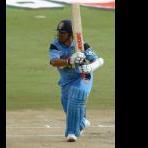
Chandan Posted January 9, 2013 Posted January 9, 2013 The Era of Sachin Tendulkar The following piece is written by Tarika Khattar. Tarika is currently studying history and film at the University of Chicago His brow was not puckered with concentration. His baby face never furrowed. In fact, it was the stillness of his expression, the calm exterior, that suggested that he had never been more focused. Dilhara Fernando began his most memorable run-up, but nobody was watching him. All eyes were on the little manÃÃat tapping rhythmically, back stretched forward in the most compact, beautiful arc, head so still that not one, but a whole pile of saucers could balance with ease upon it. Few stadiums had perhaps ever been so noisy and yet, for all the screaming, in that moment it seemed as though the wind itself had gone mute. Fernando's front foot landed. A billion people inhaled simultaneously. Fists clenched. Forgotten mouths hanging open. 10th December 2005. I was fourteen years old, at last old enough to attend a cricket match without 'adult supervision'. Of course, what that really meant was that I now had the license to make a complete fool of myself without my father taking me to the corner of the stand to tell me I was 'attracting too much attention'. I had planted myself in Hill B of the Feroz Shah Kotla so often that I had begun to lose all sense of public etiquette, feeling, in my pompous teenage way, to be very much at home. Those who have been to Kotla would know that Hill B is adjacent to the Pavilion and that in front of the Pavilion is a rather tiny stand, for an elite fifty people, through which the players actually walk out. I had been eyeing that stand for months and little did I know when I walked in with a couple of my friends that morning that a benevolent policeman was going to grant me my wish. He had seen us at a couple of matches and, after much pleading, agreed in hushed tones to sneak us into the coveted stand. The dream had begun. Sachin Tendulkar equaled Sunil Gavaskar's record of 34 Test centuries in December 2004. I dreamt so hard that I would see him break the record that it often brought me to tears. I don't believe in fate but I think I did catch a glimpse of its twisted form that year as Sachin was ruled out with a tennis elbow. So a year later, as I sat in the stands on the morning of the Delhi test, having rather too proudly bunked a day of school, a sense of destiny prevailed. There is nothing like being in an Indian stadium when India loses its second wicket. It is perhaps the only time a fan openly displays joy at an Indian batsman's dismissal. For those who have never watched a home game, it is impossible to describe the experience. Separated only by the crude cage that is present in sub-continent stadiums (oh the bliss of watching a match in England!), I watched from mere inches as Sachin Tendulkar walked out to bat. Dilhara Fernando never bowled that ball. He hung onto it, teasing the maestro and a billion others. A cruel, cruel joke. My foot slipped out of the small square in the iron cage into which I had somehow squeezed three of my aching toes as I climbed up. I was enraged. Annoyed. Angry. Looking around frantically, I realized that so were the 35,000 people with me. And then the big screen flashed Sachin's sudden smile. The mischievous glint in his eye was so re-assuring. He wasn't upset. He thought it was amusing. Immediately, nervous smiles spread across the stadium like a Mexican wave. I vaguely felt a stick rapping against my ankles. There was a faint tugging on my shoes. But I was in a distant dream, too far away to feel it or care. Chaminda Vaas was trotting in. Sachin was on 99. I hoisted myself up further on the cage, emerging from the sea of clawing and screaming. I was floating above the Feroz Shah Kotla. Sachin casually flicked Vaas around his legs and there it was. The punch in the air. The helmet off. The bat raised to the sky. And of course, the smile. The rest of it is so blurred that I can barely recall it. I know the stick belonged to a policeman and he ended up dislodging me from my vantage point. I know that when bad light stopped play, people jostled to get close to Tendulkar and Ganguly as they walked to the Pavilion, but I stood rooted to the ground, too numb to move. I know there were tears. And I know there was one memory that filled my mind: The first time I saw his back foot punchÃÇeet withdrawing gracefully into the crease, the sudden spring onto the toes, the quick back lift to meet the ball and then, the astoundingly poised follow-through. I had never seen anything so beautiful. I don't remember leaving the stadium and I have no idea how I got home. All I remember is that feeling. You know it. Indian or not, if you love the game and you've watched the man, you've felt it. The language of Cricket is far more poetic than words can ever hope to be. And every once in a while comes an orchestrator who transforms that poetry to music. All we can do, and really all we want to do, is stand back and cherish it because deep down we know that those notes may never be struck again. So much has been written about Sachin TendulkarÃÔ 100th 100 that I dare not dip my pen into that pot. He has been playing international cricket longer than I have been alive. I feel privileged to say that I have never known a life without him. Great players have walked the dusty lanes of Cricket's past, and perhaps greater ones will set foot upon them in the years to come. But in this moment, on the brink of such monumental history, I write these words to signify the honour I feel of having belonged to the era of Sachin Tendulkar.

Recommended Posts
Create an account or sign in to comment
You need to be a member in order to leave a comment
Create an account
Sign up for a new account in our community. It's easy!
Register a new accountSign in
Already have an account? Sign in here.
Sign In Now